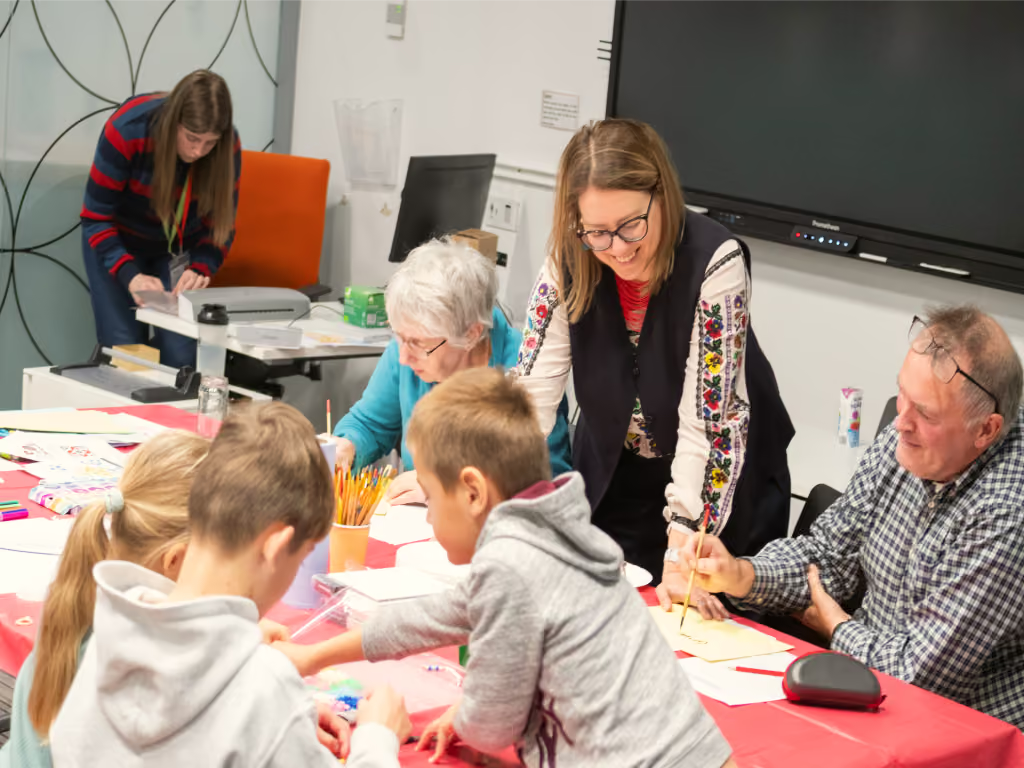
For more than four years, RMC Charity has collaborated with local organisations to provide vital multi-agency support to those arriving from Ukraine. Here, Sandra Tittel discusses our Homes for Ukraine project as an incredible example of innovative partnerships in the migration sector, demonstrating how lasting change happens when we work together.
RMC staff, such as Head of Resettlement and Integration, Sandra Tittel, have extensive knowledge of supporting individuals and families to build full, independent lives in their new homes. 27 years of experience has taught RMC that this knowledge is only strengthened when shared – collaboration is a core value of the organisation.
Sandra highlights our Homes for Ukraine (HfU) Resettlement Project, an example of how strong, effective, multi-agency partnerships are instrumental in creating safe, succinct resettlement journeys for those seeking refuge. In 2022, RMC's Resettlement team proactively reached out to organisations across the West Midlands (such as NB4U, Centrala, EWA, Moseley for Ukraine, Ukraine Voice UK, Kryla and Bosnia House).
“As soon as we heard news of the crisis in Ukraine, we began working on our communication strategy, reaching out to grassroots organisations who were already preparing to mobilise support so that we could understand the services readily available to those arriving in the UK and ensure there were no gaps.”
This initiative allowed the Resettlement Team to begin building positive relationships and forming a coherent response to the budding emergency before a support service was even commissioned. Comprehensive and coherent support was paramount. With, often, limited knowledge of the language, culture, and systems in their new country, it is easy for newcomers to feel stuck in a frustrating cycle of identifying support systems, navigating complex processes, and visiting multiple organisations for support. This can lead to the duplication of work, long referral processes, and unclear information, whilst individuals are facing the risk of crisis and destitution. Coordinating and collaborating effectively allowed the partnership to provide immediate, comprehensive and straightforward support available for arriving families and their communities.
Sandra attributes the success of HfU to the forward-thinking approach of RMC’s Resettlement Team and partners with limited resources who nonetheless committed to collaboration with larger providers such as RMC, something that was previously not common practice.
This innovative approach to partnerships proved effective and impactful when, in 2023, RMC were awarded the local authority contract for Homes for Ukraine provision. This increased access to resources and produced even stronger partnerships as RMC were now able to do outreach on a scale previously unimagined. Sandra explains that thanks to collaboration between grassroots networks, larger organisations and the public themselves, her team were able to reach practically every arrival from Ukraine and provide resources to the smaller services, ensuring there were no gaps in support and no needs unmet. Four years later and RMC continues to attend these spaces on a weekly or bi-weekly basis, continually fostering and nurturing partnerships that ensure no one who needs support fell through the gaps.
The partnership approach has differed from older Resettlement projects, such as the Afghan Citizens Resettlement Scheme (ACRS), in part because the public (acting as “Hosts” for Ukrainian newcomers) were now key partners. This unique factor proved to be a powerful force, according to Sandra this has driven transparency and accountability in service delivery and been instrumental in the success of the Homes for Ukraine Permission Extension scheme (RMC is funded for support until 2027). For example, the use of WhatsApp channels as a virtual hub for informing hosts of events, meetings, donations and more improved information sharing and ensuring that work was not being duplicated. This fostered a sense of transparency and partnership which Sandra calls 'pivotal' in reshaping how these schemes are designed.
The success of the WhatsApp group as an information-sharing system inspired the creation of "The Chronicle" — an accessible, shared resource with carefully curated and regularly updated information that circulated monthly to all stakeholders. Collated by RMC, it provides reliable and up-to-date information, hugely important in an era of misinformation. Sandra believes that this has allowed for a more ‘Creative approach to Resettlement projects’ as RMC have taken the knowledge gained and lessons learned from the HfU project to improve current and future resettlement schemes. Many initial HfU partners are now funded for Afghan Resettlement Programmes (ARP), whilst RMC continues to build partnerships with providers such as BEEAS, Thrive, Breaking Barriers, The Bike Project, Restore, and Karis Neighbourhood Scheme to deliver successful resettlement programmes across the Midlands.
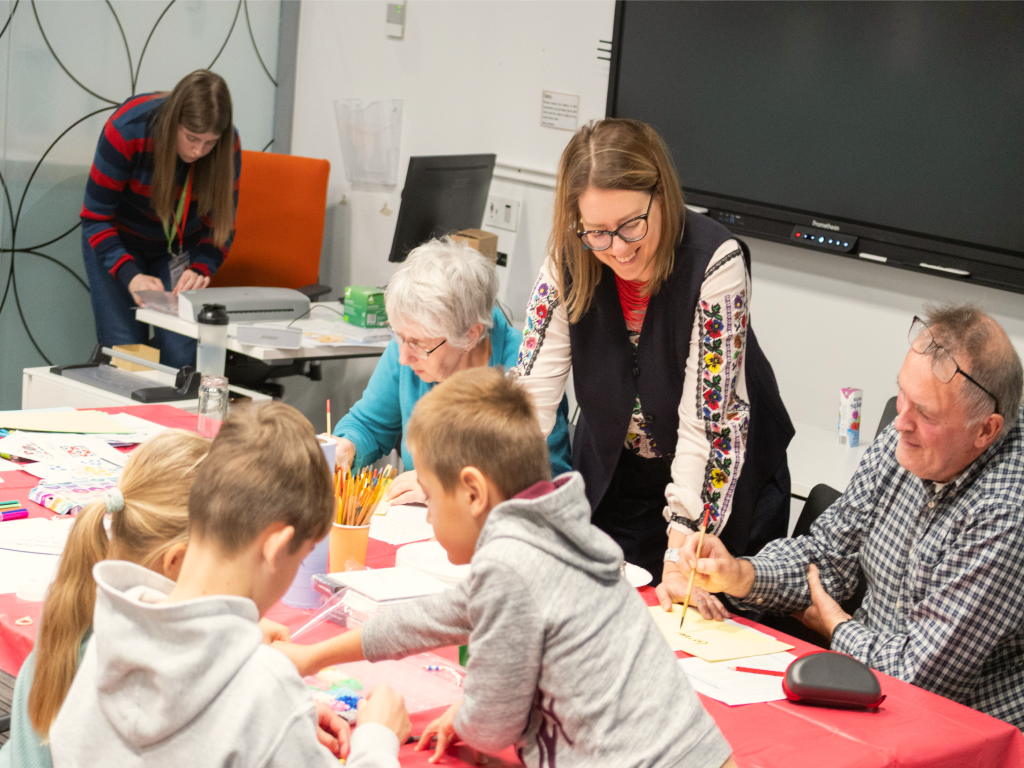
The accomplishments of this model of partnerships lead to the replication of the WhatsApp group for ARP. Collaboration in real time has allowed for a full-partnership approach, culminating in the 12-week ARP welcome course, supporting new arrivals with key aspects of resettlement, such as housing, income, benefits, health, digital skills, language skills, employment and community building. Furthermore, the success of The Chronicle amongst the initial Ukrainian userbase led to its expansion, now covering wider resettlement schemes.
The HfU partnership highlights the need for effective multiagency collaboration across the sector to best support our communities with their varying and complex needs. Larger charities benefit from on-the-ground knowledge and speedy mobilisation of smaller grassroots organisations with local supporters; whilst smaller organisations benefit from the reach and resources of their larger scale counterparts.
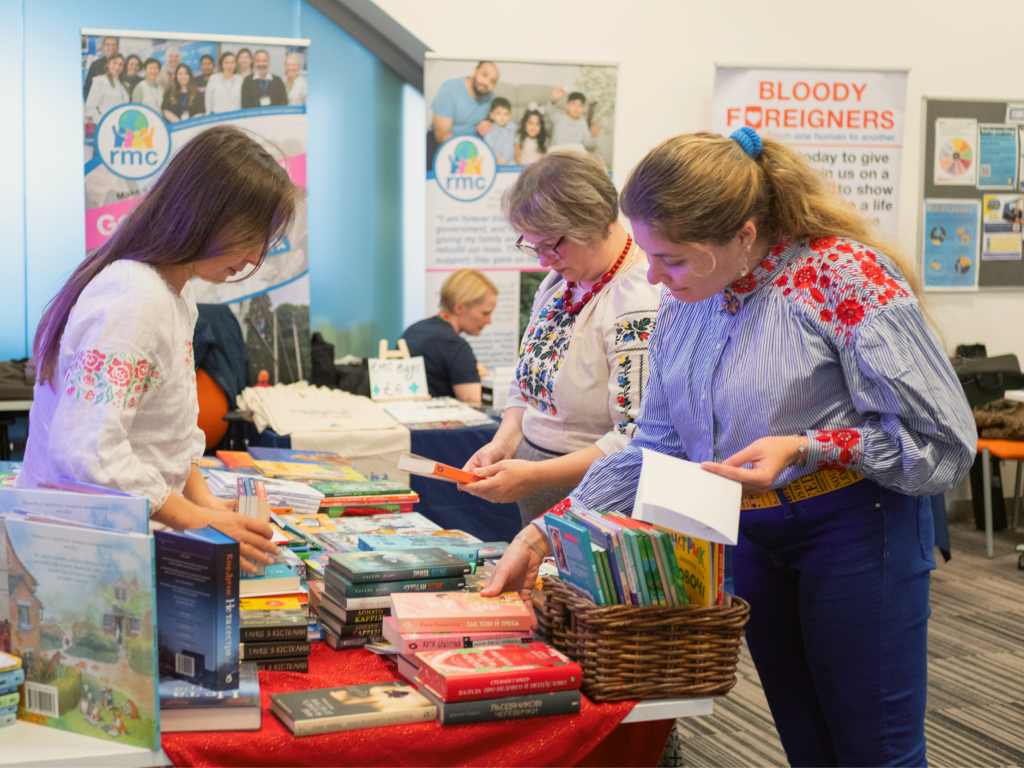
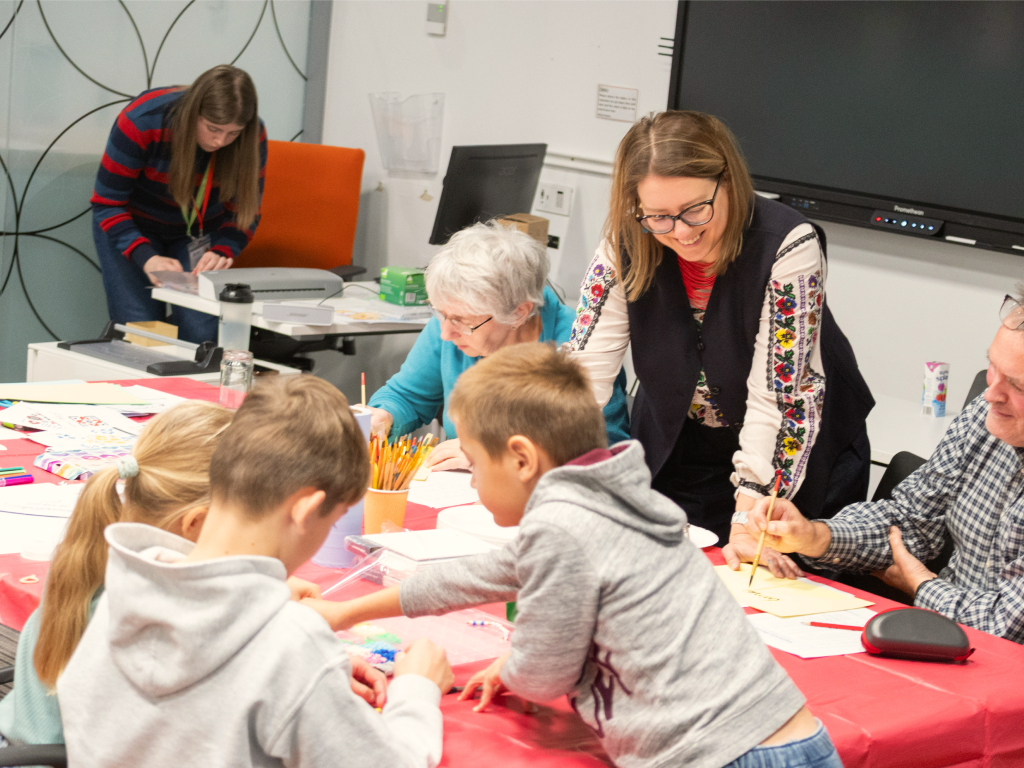
Delivering whole person support from a single point of service is only possible through effective partnerships which save time and resources, enabling organisations to focus not only on practical support in crisis and destitution prevention, but also on providing a more human and culturally enriching resettlement experience. Through these partnerships, HfU had the time and resources to reimagine a more holistic approach to Resettlement, from events, trips and social groups to the Modern Art Program and its Creativity Through Resilience exhibit in 2025. Partnership in the migration sector is essential because efficiency in service provision allows us to expand beyond crisis prevention and consider what tools people need to truly resettle and build a future that is not only safe but bright. For example, RMC and partners were able to host a widely successful celebration of Ukrainian Literature Day in 2026, supporting the community to focus on art, culture. The freedom to experience fun creates stronger community ties and happier, more secure, resettled families.
Partnerships provide more than just crisis aversion; they provide a safe, stable foundation of support for people and communities to not only hope for but to truly live a full life and shape their own future. Collaboration is key to the success of our communities, because lasting change happens when we work together.